


Akiya Houses for Sale in Japan: Where to Find Listings and the Best Prefectures


Akiya houses for sale in Japan are easier to find than most buyers think. Japan has about 9 million vacant homes, and thousands are listed online today.
Japan runs two national akiya bank portals, LIFULL HOME'S and at home. Together they listed 19,075 properties from 1,134 local governments in February 2026. On September 23, 2026, LIFULL alone listed 8,720 properties from 788 local governments.
This guide shows where to search, which prefecture to choose, and what listings really cost. For the basics, start with our full guide to akiya houses.
Where can I look for akiya houses for sale in Japan?
You can search for akiya in four places. Most buyers use two or three of them.
1. National akiya bank portals
Akiya banks are listing sites that local governments run for vacant homes. Owners list old houses for sale, for rent, or even for free.
Two national portals collect thousands of these listings in one place:
LIFULL HOME'S akiya bank: 8,720 listings from 788 local governments (September 23, 2026). You can search by prefecture, town, price, or lifestyle.
at home akiya bank: the second national portal. Some towns list only here, so check both.
Both sites are in Japanese. Use your browser's translate feature, or see our list of the top 7 akiya banks for foreigners.
2. Town and village akiya banks
Many towns and villages also run their own akiya banks. Some list homes that never reach the national portals.
To find one, search in Japanese: [town name] 空き家バンク. The Akiya Banks municipal directory lists each prefecture's towns in English.
3. English-language listing sites
Several private sites collect and translate akiya listings, such as Akiya Japan, AllAkiyas, Akiyahopper, and Old Houses Japan.
Check the date added and the original source before you contact anyone. Private sites can show listings that have already sold.
4. Local real estate agents
Agents in rural areas handle many old houses that never reach an akiya bank. Contact agents in the town you choose, and ask about unlisted properties.
💡 Want help with the search? Our partner Yuki Homes offers end-to-end support for foreign buyers, from finding an akiya to closing. MailMate partners with Yuki Homes.
What are the legal criteria for foreign buyers?
Foreigners can own land and houses in Japan with no residency, visa, or citizenship requirement. Owning property does not give you a visa.
Most purchases follow five legal steps:
Inspect the property and check the land registry (登記簿謄本).
Sign the sale contract (売買契約書) after the Important Matters Explanation (重要事項説明).
Register the title at the Legal Affairs Bureau through a judicial scrivener (司法書士).
Register for property tax and, if you live abroad, appoint a tax manager (納税管理人).
Transfer utilities and complete local registrations.
New rules for akiya buyers (2024 to 2026)
Rule |
Start date |
Who it affects |
What you must do |
Inheritance registration |
April 1, 2024 |
Heirs |
Register inherited land and buildings within 3 years |
Domestic contact |
April 1, 2024 |
Owners living abroad |
Name a contact in Japan, or state you have none, when you register title |
FEFTA property report |
April 1, 2026 |
Non-resident buyers |
Report every purchase to the Minister of Finance within 20 days |
Address change registration |
April 1, 2026 |
All registered owners |
Register a new address or name within 2 years |
Nationality declaration |
October 5, 2026 |
All new owners, Japanese included |
Declare nationality when you register title |
For details on each rule, see the rules section of our akiya houses guide.
Important note: work with a licensed real estate agent (宅地建物取引士) and a judicial scrivener. Lawyers rarely handle standard purchases in Japan.
5 best places to find akiya houses for sale in Japan
These five prefectures balance listing numbers, prices, and access to major cities. The table shows what the LIFULL HOME'S akiya bank listed on September 23, 2026.
Prefecture |
Total listings |
Homes for sale |
Towns with the most listings |
Home prices seen* |
Shizuoka |
66 |
42 |
Oyama (22), Fuji (8), Yaizu (8) |
¥2M to ¥45M |
Nagano |
185 |
107 |
Iizuna (62), Okaya (43), Aoki Village (25) |
¥0.5M to ¥30M |
Fukuoka |
78 |
39 |
Nakama (26), Asakura (16), Yukuhashi (14) |
¥1.5M to ¥26M |
Yamanashi |
124 |
74 |
Kofu (49), Nirasaki (35), Minobu (24) |
¥1M to ¥25M |
Gunma |
143 |
85 |
Tsumagoi Village (62), Tomioka (21), Annaka (20) |
¥1M to ¥38M |
*Based on the 30 newest listings in each prefecture, excluding public land sales. Listings change daily, so check the portal for today's count.
Nagano has the most listings and some of the cheapest homes. Shizuoka has the highest prices, mostly because of its Tokyo access.
Sources: LIFULL HOME'S akiya bank pages for Shizuoka, Nagano, Fukuoka, Yamanashi, and Gunma
1. Shizuoka

Shizuoka sits between Tokyo and Nagoya, with Mt. Fuji to the north and the Pacific to the south. Its two main cities are Shizuoka City and Hamamatsu.
With mountains and ocean nearby, Shizuoka suits buyers who love hiking, swimming, and fishing. Shizuoka is also about 1 hour from Tokyo by Shinkansen.
Listings today: 66, including 42 homes for sale
Most listings: Oyama (22), at the foot of Mt. Fuji, then Fuji and Yaizu (8 each)
Home prices seen: about ¥2 million to ¥45 million. Many cost more than ¥8 million.
Best for: buyers who want easy Tokyo access and can pay more
2. Nagano

Nagano has the most akiya listings of these five prefectures, and some of the lowest prices. Many sit in mountain towns and villages near the Japanese Alps.
Expect snowy winters and a slower rural pace. Most listed homes sit outside the cities, so plan to drive.
Listings today: 185, including 107 homes for sale
Most listings: Iizuna (62), Okaya (43), and Aoki Village (25)
Home prices seen: from ¥500,000 to about ¥30 million
Best for: buyers who want space, mountains, and a low price
Search: Nagano on the LIFULL akiya bank
3. Fukuoka

Fukuoka is known across Japan for warm hospitality and great food. Winters are mild, with an average of about 17°C year-round.
Few akiya reach the national portal from big cities such as Fukuoka City and Kitakyushu. Most listings sit in smaller towns within reach of both cities.
Kitakyushu pays newlyweds and families moving in up to ¥200,000 to rent, or up to ¥500,000 to buy. Miyako Town sits in Miyako District, written with the same characters as Kyoto (京都).
Listings today: 78, including 39 homes for sale
Most listings: Nakama (26), Asakura (16), and Yukuhashi (14)
Home prices seen: about ¥1.5 million to ¥26 million
Best for: buyers who want a mild climate and city access
Search: Fukuoka on the LIFULL akiya bank
Source: Kitakyushu City
4. Yamanashi

Yamanashi borders Tokyo to the west, with views of Mt. Fuji and the Southern Alps. It is famous for fruit farms and clean spring water.
Many listings sit in or near Kofu, the capital, so shops and services are close. For a quieter life, look at mountain towns such as Minobu.
Listings today: 124, including 74 homes for sale
Most listings: Kofu (49), Nirasaki (35), and Minobu (24)
Home prices seen: from ¥1 million to about ¥25 million
Best for: buyers who want Tokyo access and Mt. Fuji views
5. Gunma

Gunma sits just north of Saitama, within reach of Tokyo. It is known for Kusatsu Onsen, skiing, and lower land costs than much of the Kanto region.
Tsumagoi Village alone has 62 listings, more than all of Tokyo. Its highland villa areas stay cool in summer.
Listings today: 143, including 85 homes for sale
Most listings: Tsumagoi Village (62), Tomioka (21), and Annaka (20)
Home prices seen: from ¥1 million to about ¥38 million
Best for: buyers who want a vacation home or countryside base near Tokyo
Search: Gunma on the LIFULL akiya bank
Practical next steps for foreign buyers
Here’s a step-by-step checklist for foreign nationals (or non-residents) who want to buy vacant homes in Japan:
1. Start with akiya listing platforms
Use Akiya Banks to find local government–run vacant home banks.
2. Perform legal & financial due diligence
Consult a judicial scrivener (司法書士, shihō shoshi) to handle registration: you’ll need documents like the sales contract, fixed‑asset valuation, seal certificate, and address verification.
Appoint a tax manager (納税管理人, nōzei kanrinin) if you live outside Japan. Owners abroad generally must name one for fixed asset tax.
-
Be aware of tax obligations:
Fixed-asset (property) tax is levied annually.
Registration and license taxes apply when registering the property.
Non-resident buyers must report every purchase under the Foreign Exchange and Foreign Trade Act within 20 days. Since April 2026, this applies whatever the price or purpose.
3. Close the transaction
Sign a sales contract with help from your real estate agent and judicial scrivener.
Transfer ownership at the Legal Affairs Bureau (法務局, houmu kyoku) to register your name on the property register.
Pay any necessary stamp duty or contract-related tax, and complete the registration and license tax process.
4. Post-acquisition logistics
After purchase, confirm your tax manager (if non-resident) to handle ongoing property tax, notifications, and correspondence.
If you plan to rent out the property or use it as a vacation home, check local zoning and short-term rental regulations (since these vary by municipality).
Plan your renovation: many akiya are old and will need work. Local governments may have renovation subsidies—check the municipal akiya bank or regional office for grants.
5. Long-term considerations
Use a bilingual real estate agent or relocation service if you’re not fluent in Japanese.
Develop a maintenance plan—neglected roofs, utilities, or infrastructure can make costs spiral.
Stay informed about local revitalization programs. Many rural towns offer incentives to new residents, but most require you to live in the town.
Risks to check before you buy
Cheap old houses often carry hidden limits. Check these five before you sign:
Rebuild limits: the land needs 2 meters of frontage on a road at least 4 meters wide.
Earthquake standard: homes with permits issued before June 1, 1981 may need a seismic retrofit.
Hazard zones: check flood and landslide maps for the town.
Access: rural homes may be far from shops, clinics, and trains.
Resale: many akiya are hard to sell later.
For the full buying process, see our guide to akiya houses.
What are the benefits to living in Japan's countryside? Why should I live in rural Japan?

Many akiya houses in Japan are far from major cities such as Tokyo, Kyoto, and Osaka. But don't let that stop you.
There are plenty of akiya for sale around Tokyo and other major Japanese cities. However, if you're willing to live in Japan's countryside, you'll find an abundance of options—and you can still take public transportation into major towns and cities.
There are financial benefits to moving and living in rural areas in Japan as local rural governments have plenty of subsidized programs to help with the following.
1. Migration/moving funds
Most "¥1 million relocation grants" you see online are the same national program (移住支援金). Prefectures and towns pay it together, and the rules are strict:
Amount: up to ¥1 million per household, plus up to ¥1 million per child under 18. Singles get up to ¥600,000.
Criteria: you must have lived in, or commuted to, Tokyo's 23 wards for 5 of the last 10 years.
After the move: you must take a local job, start a business, or keep your current job by working remotely. Some towns accept only some of these routes.
Visa: you need Japanese nationality or a qualifying status, such as permanent resident or spouse of a Japanese national.
Buyers moving from abroad do not qualify. Many towns run their own smaller grants, so check each town's page before you choose. Town programs can also help with moving costs, rent, or job training.
💡Read also: Will Japan Pay You To Move There?
2. Childcare support
Many towns support families with free or low-cost child medical care, school costs, and even birthday gifts. Programs differ by town, so check each town's page before you choose.
3. Housing renovation subsidies
Many local governments pay part of the cost of akiya renovations for homes on their akiya bank. For example, Hinohara Village in Tokyo pays half the renovation cost, up to ¥1 million.
On the LIFULL akiya bank, each town page lists its support programs, such as purchase or renovation subsidies. Many programs need your application before work starts.
How to use MailMate to navigate common akiya challenges
One of the common challenges that hopeful home owners are faced with is the language barrier.
Most of the information concerning the akiya purchase process and houses for sale in Japan are solely in Japanese.
Finding a bilingual property management service, like MailMate, is a move that will alleviate uncertainty and give you peace of mind.
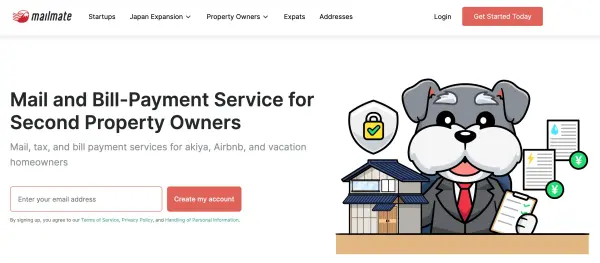
Here's how MailMate's Akiya & Vacation Home Package can help you on your akiya journey:
a. Tax manager & domestic contact service
Owning property in Japan means paying fixed asset tax every year. If you live abroad, you generally must appoint a tax manager (納税管理人) to receive the bills.
MailMate acts as a tax representative and a domestic point of contact for owners abroad.
Not paying your taxes will result in late fees and possible seizure and sale of your assets. To avoid such occurrences, especially if you are abroad or away from your property for a long time, make MailMate your tax representative.
All tax-related information will be sent to MailMate and scanned into your dashboard. Here, you can request that we handle the necessary paperwork so your taxes will be paid on time.
b. Virtual mailbox with easy mail management
MailMate provides a virtual mailbox service that allows you to manage all mail and documents online.

The best part is that MailMate will provide translation summaries of Japanese mail (such as tax notifications, utility bills, and local government notices) so that you can take action on the items that arrive at your property.
Their bilingual support staff, fluent in English and Japanese, will ensure clear communication and accurate translation and handle any correspondence effectively, including paying bills upon request.
c. Liaison services
Communicating in Japanese can be stressful, but that shouldn't stop you from scheduling important maintenance and services on your property.
Here's where MailMate comes in. Let us know what services you want on your property, such as utility set-up, internet setup, regular cleaning, yard work, etc., and we will schedule them for you.

We will give you the information, such as the date and whether you need to be there in person.
Frequently asked questions
Where can I find akiya houses for sale in Japan?
Start with the two national portals: the LIFULL akiya bank and the at home akiya bank. On September 23, 2026, LIFULL listed 8,720 properties from 788 local governments. Also check town akiya banks, English listing sites, and local real estate agents.
Can foreigners buy akiya houses in Japan?
Yes. Foreigners can own land and houses in Japan with no residency, visa, or citizenship requirement. Owning a house does not give you a visa. Non-residents must file a FEFTA report within 20 days and appoint a tax manager.
Which prefectures have the most akiya listings?
Among the five prefectures in this guide, Nagano had the most listings on September 23, 2026, with 185 on LIFULL. Gunma had 143 and Yamanashi had 124. Counts change daily, so check the portal for current numbers.
Can I buy a house in Japan for $5,000?
Rarely, but homes under ¥1 million do appear. On September 23, 2026, LIFULL listed homes from ¥500,000 in Nagano and ¥1 million in Gunma and Yamanashi. These are usually old houses in rural areas that need major renovation.
Can foreigners get the ¥1 million relocation grant?
Only some can. You need Japanese nationality or a qualifying visa, such as permanent resident, spouse of a Japanese national, or long-term resident. You must also have lived in, or commuted to, the Tokyo 23 wards for 5 of the last 10 years. Buyers moving from abroad do not qualify.
Are there akiya houses for sale in Tokyo?
Very few. The Tokyo used-home market moves fast, so most empty houses sell through agents. Nearby Saitama, Chiba, and Kanagawa have more listings than Tokyo. See our guide to akiya houses for sale in Tokyo.
Can foreigners get mortgages for akiya properties?
Yes, but it is hard. Japanese banks usually want permanent residency and a stable Japanese income. Banks also rarely lend on old rural houses, so many foreign buyers pay cash.
Can I rent out my akiya as an Airbnb?
Yes, if you register under the Private Lodging Business Act. Registered minpaku can host guests for up to 180 nights a year. Many towns and cities add stricter local rules, so check before you buy.
In closing
Thousands of akiya houses for sale in Japan are listed online today. Start with the two national akiya banks, then choose a prefecture that fits your budget and lifestyle.
Contact local agents and check each town's criteria and subsidies before submitting an offer. Once you have bought, MailMate can handle your mail, tax bills, and utilities from anywhere.
Spending too long figuring out your Japanese mail?
Virtual mail + translation services start at 3800 per month. 30-day money-back guarantee.