


Moving in Japan? A Step-by-Step Moving Guide For Foreigners

Moving within Japan involves four main stages: preparing one month before your move, completing paperwork one week before, handling move-day logistics, and registering at your new address afterward.
The most important legal deadlines are submitting a moving-out notification (tenshutsu todoke, 転出届) to your current city office within 14 days of moving, and submitting a moving-in notification (tennyu todoke, 転入届) to your new city office within 14 days of arrival. Missing either deadline can result in fines. This guide walks through each stage in the order you need to complete it.
Before moving in Japan
Let's start with what needs to be done before you start moving within Japan.
One month prior
Avoid doing these important tasks at the very last minute.
1. Secure a house or new apartment.

These steps can apply to rental apartments as well.
Make sure you have your next residence ready before moving.
If you haven't found a place yet, use this time to explore your options. When searching for an apartment, a house, or an akiya, you can compare rent, amenities, and proximity to train stations, grocery stores, and conbini on various real estate websites and akiya banks.
You can also consider an akiyas or abandoned houses in Japan for a cheaper alternative. Just note that these options are more rural and away from the city.
2. Select a moving company and date.
Probably the trickiest part when moving in Japan. Some of the best moving companies in Japan with English services include:
Yamato Home Convenience (now operating as ART SETTING DELIVERY Co., Ltd. following an acquisition by ART MOVING COMPANY in January 2025, though services continue in partnership with Yamato Transport)
Fukuoka Soko Group
Tokyo Helping Hands
Moving costs in Japan
Moving costs in Japan vary based on the volume of your belongings, the distance of your move, and the time of year. According to data from Hikkoshi Samurai and SUUMO, a single person with fewer items can expect to pay between 30,000 and 62,000 yen for a local move during off-peak months. A long-distance move for a single person typically runs between 60,000 and 120,000 yen in off-peak periods. During peak season from February through April, these figures can roughly double. Getting quotes from at least two or three companies and comparing them is strongly recommended, as prices vary significantly between providers.
You can get a quote from each moving company to compare the overall cost. You can negotiate to lower the price if your Japanese is strong enough.
Best moving season in Japan
Japan's primary moving season runs from late February through April. This is driven by the Japanese fiscal and academic year, which begins on April 1. New graduates move to start jobs, university students relocate near their campuses, and corporate employees are transferred nationwide to be in place by April 1. As a result, demand for moving companies surges dramatically during this window.
Prices can roughly double compared to off-peak months, and moving companies are often fully booked weeks or even months in advance. March is typically the single most expensive and most difficult month to book a move. A secondary peak occurs in September and October, driven by mid-year corporate transfers.
If you have flexibility in your schedule, the cheapest and easiest months to move are June, November, and January. December can also offer good deals as moving companies try to fill end-of-year slots. If you must move during peak season, aim to book your moving company at least four to six weeks in advance, and expect to pay significantly more than you would during off-peak periods.
3. Contact your property management company or landlord .
There are two ways to contact your property management company or landlord: by phone or website.
When you contact them, tell them your moving date so that they can meet you in person so you can hand over the keys. They'll check everything and have you sign any necessary papers.
When you move out, your property management company will make the appropriate calculations for you to pay accordingly. For example, if your monthly rent is 60,000 yen per month and you want to move out on the 15th, you will be responsible for paying 30,000 yen.
Additionally, cleaning fees may be added as part of your contract.
One week prior
Here is a list of items you should do one week before you move.
1. Submit a move-out notification at the city office.

Shinjuku’s English Tenshutsu Todoke Form. Also available in English, Chinese, and Korean [PDF].
You need to submit a moving-out notification called a Tenshutsu Todoke (転出届) at your city or ward office. You can file this form up to 14 days before your move or up to 14 days after moving out. Filing before your move is recommended so you can collect the moving-out certificate you will need to register at your new address. Failing to file within the 14-day window can result in a fine of up to 50,000 yen, and will delay your ability to register at your new ward office.
In addition to submitting a moving-out notification, you'll return your National Health Insurance card. A new one will be issued at the new municipality.
Once that form is submitted, you'll receive a move-out certificate, which you'll submit to the new ward office to be registered.
However, if you are moving within the same ward or city, you do not need to submit a tenshutsu todoke. Instead, you submit a change of address notification called a tenkyo todoke (転居届) directly to your city or ward office within 14 days of moving. Note that there is also a separate tenkyo todoke form for Japan Post mail forwarding, which is covered in the next section. These are two different forms submitted to two different places and should not be confused.
2. Forward your mail to your new address.
It can take a lot of work during the moving process to update all your important information with the new address immediately.
Japan Post has a separate mail forwarding form, also called tenkyo todoke (転居届), that you submit to a post office (not the city office) to redirect incoming mail to your new address. This service is free of charge and lasts for one year from the date you submit the form. Japan Post typically takes 3 to 7 business days to begin forwarding after submission, so file early to avoid any gap in mail delivery. You can submit the form in person at any post office, by dropping it in a postbox, or online through Japan Post's e-Tenkyo service if you have a Yuubin ID. Note that this only forwards Japan Post mail. Private courier deliveries from companies such as Yamato or Sagawa must be updated separately with each sender.
Want to receive your mail online?
If you are tired of going through your junk mail to find the important ones, consider a virtual mailbox like MailMate.
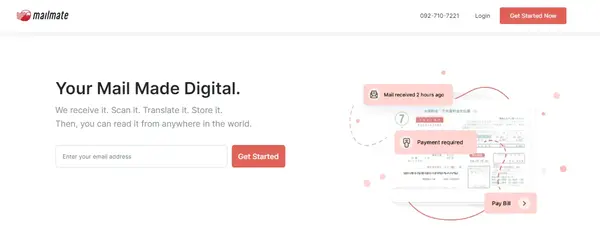
a) An easy to use online dashboard
Your mail will be sent to MailMate's scanning facility, where its outside content will be scanned. When you want to read its inside content, just click the "Open" icon.
For any unimportant mail, you can shred it to forget it.
And storage? Don't worry. MailMate's security is top-notch, ensuring your mail and online data are secure.
b) Forward your mail to where it needs to be
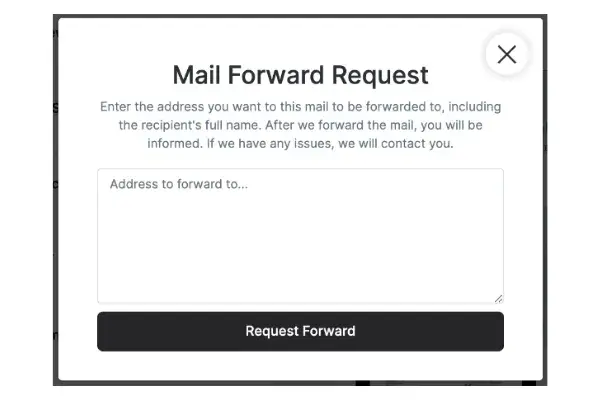
Mail forwarding on your request
An important mail was sent to MailMate. Do you need it?
You can request a forwarding, and MailMate will send it to you with a tracking number to ensure it's on your way.
Even if you are abroad, MailMate will send you important mail no matter where you are.
c) Pay bills when you're not in Japan
Even if you are in Japan, paying your bills takes time away from you doing other important tasks.
Let someone else handle it for you. MailMate can handle paying your bills at the conbini.
3. Obtain documents for the transfer of children’s schools (if applicable).
For the most part, you'll need these three documents:
Zaigaku Shoumeisho (Certificate of Student Enrollment): the current school will hand you this form to give to your local government.
Tennyuugaku Tsuuchisho (Transfer Notification Form): given to you by the local government, you'll hand this paper to the new school.
Kyokayou Tosho Kyuuyo Shoumeisho (a form showing proof that the student has received textbooks): You'll submit this paper to the new school.
4. Apply to cancel your utilities.
Similarly, when you move in to set up utilities, you'll need to apply for a cancellation on your gas, water, and electricity utilities at your previous apartment by phone or online.
Most of the time, you pick the date to stop your utilities, and the utility companies will make the appropriate calculations for the final bill.
5. Pack.
Alright, it's time to start packing your items.
Your moving company will have told you or noted that large items such as sofas, washing machines, and chairs do not need to be packed.
On your moving day in Japan
Make sure that the previous apartment is clean so you hand in your keys with no problem.
If you are in the countryside, say goodbye to your old neighbors and greet your new ones.
After you moved in Japan
Now you have your items and boxes in your new place, you might think it's over.
However, Japan loves their paperwork, so you still need to do a couple more things. You're almost at the finish line!
You need to:
Submit your move-in notification (tennyu todoke, 転入届) at your new city office. You must do this within 14 days of moving into your new address. Bring your moving-out certificate from your previous ward office, your residence card, and your My Number card. Failing to register within 14 days can result in a fine of up to 200,000 yen and may complicate your visa status.
Update the address on your residence card. This is done at the same city office visit as your move-in notification. The staff will update your residence card address on the spot. You do not need to get a new card unless your card has expired.
Submit the Japan Post tenkyo todoke if you have not done so already. If you did not file your mail forwarding form before moving, do so now at your nearest post office. The service is free and lasts one year from the submission date.
Complete any school transfer documents (if applicable). Bring the school transfer documents obtained before your move to the new school to complete enrollment.
Update your address with banks, mobile carriers, and other services. Many official documents such as bank statements and tax notices are marked "Do Not Forward" by Japan Post, meaning the tenkyo todoke will not redirect them. Update your address directly with banks, credit card companies, your mobile carrier, and any government pension or tax accounts.
Frequently asked questions
How much does it cost to move in Japan?
Moving costs in Japan vary depending on the volume of your belongings, the distance of your move, and the time of year. For a single person with fewer items, a local move during off-peak months typically costs between 30,000 and 62,000 yen. A long-distance move for a single person generally runs between 60,000 and 120,000 yen. During peak season from February through April, prices can roughly double. Getting quotes from at least two or three moving companies in Japan before confirming your moving date is strongly recommended, as fees vary depending on the provider.
What documents do I need when moving out of a Japanese apartment?
When moving out of a rental apartment in Japan, you will need to submit a moving-out notification (tenshutsu todoke) to your city office or ward office within 14 days. You will receive a moving-out certificate in return, which you need to register at your new address. Return your national health insurance card at the same visit, as a new one will be issued at your new municipality. You will also need to settle your final bill with your property manager, which is calculated based on your move-out date and monthly rent. Check your contract carefully for cleaning fees, as these vary significantly between property owners.
What is the difference between tenshutsu todoke and tenkyo todoke?
These are two different forms that are often confused. The tenshutsu todoke (転出届) is a moving-out notification submitted to your city hall or ward office when you are moving to a different city or municipality. The tenkyo todoke (転居届) refers to two separate things: a change-of-address notification submitted to your local ward office when moving within the same ward, and a separate Japan Post mail forwarding form submitted to your local post office. The city office form updates your legal residency registration. The post office form redirects your Japan Post mail to your new address for up to one year at no cost.
How do I forward my mail when moving in Japan?
Submit a tenkyo todoke form to your local post office to redirect Japan Post mail from your old address to your new address. This service is free of charge and lasts for one year from the date you submit the form. You can submit the form in person at any post office, drop it in a postbox, or apply online through Japan Post's e-Tenkyo service using a Yuubin ID. Japan Post typically takes 3 to 7 business days to activate the mail forwarding service. Note that this only covers Japan Post mail. Deliveries from private courier companies must be updated separately with each sender.
When should I cancel utilities when moving in Japan?
Contact your gas company, water bureau, and electricity provider at least one week before your move-out date to arrange cancellation. Most utility companies allow you to cancel by phone or through an online form using your customer number, which is printed on your most recent bill. You choose the date to stop service, and the utility companies will calculate your final bill based on actual usage up to that date. When setting up utilities at your new residence, the gas company will typically require a staff visit to check the gas meter and turn on the supply, so book this appointment early.
What are the upfront costs when renting a new apartment in Japan?
Renting a new apartment in Japan typically involves several upfront costs beyond the first month's rent. These commonly include a security deposit of one to two months' rent, key money (reikin) of one to two months' rent paid to the property owner, a real estate agency fee of approximately one month's rent, guarantor fees if you use a guarantor company, and fire insurance. Some properties also charge a renewal fee when your lease is extended. Initial deposit costs vary significantly between properties, so confirm all fees in writing before signing.
Do I need to register my new address after moving in Japan?
Yes. You must submit a moving-in notification (tennyu todoke, 転入届) at your new city office or municipal office within 14 days of moving into your new residence. Bring your moving-out certificate from your previous ward office, your residence card, and your My Number card. At the same visit, staff will update the address on your residence card. Failing to register within 14 days can result in a fine and may complicate administrative procedures related to your visa, national health insurance, and resident tax.
What happens to my national health insurance when I move in Japan?
When you submit your moving-out notification at your city office, you return your national health insurance card. A new card will be issued at your new municipality once you complete your moving-in notification there. There is typically a short gap between returning your old card and receiving your new one. Keep a record of your old insurance details in case you need medical care during this transition period, as your coverage continues even if the physical card has been returned.
How do I set up internet when moving to a new apartment in Japan?
Setting up internet in a new Japanese apartment can take longer than expected. Many providers require installation of a physical line, which may need approval from your property manager or management company before work can begin. The process can take anywhere from two to six weeks depending on the internet service provider and building type. Apply online or by phone as early as possible, ideally before your move-in date. If you need internet immediately, a pocket Wi-Fi device or a SIM card with a data plan from a convenience store can serve as a short-term solution while you wait.
What should I do on moving day in Japan?
On your moving day, ensure the previous apartment is completely empty and clean before handing over the keys to your property manager or management company. Check your contract for any specific cleaning requirements, as cleaning fees vary depending on the condition of the apartment and what is specified in your agreement. Confirm that large furniture and items such as washing machines have been moved or properly disposed of according to your local ward's bulky waste rules. If you are moving to a new area, greeting your new neighbors with a small gift is a common Japanese custom and helps start your new residence on a positive note.
In closing
Congratulations on moving within Japan!
The whole moving process can be a hassle that is difficult to do on your own. But this moving in Japan guide is here to help you along the way.
Spending too long figuring out your Japanese mail?
Virtual mail + translation services start at 3800 per month. 30-day money-back guarantee.