


10 Top English-Speaking Hospitals and Clinics in Tokyo

Finding English-speaking hospitals in Tokyo is one of the biggest challenges facing tourists and foreign residents in Japan.
If you don't speak Japanese and someone falls ill, the language barrier raises real stress fast. It can limit which medical institutions feel safe to visit.
The good news: many hospitals in Tokyo now welcome patients of various nationalities. We've curated a list of 10 English-speaking hospitals and clinics with english speaking doctors on staff.
We also cover the certifications hospitals earn for multilingual care. Bookmark this page so you know exactly where to turn next time.
Where can I find an English-speaking doctor in Tokyo?
You can find english speaking doctors in Tokyo by checking two certifications:
These certifications confirm a hospital can treat patients of various nationalities. Certified hospitals also offer multilingual consultations, not just English.
Living outside Tokyo? Search "JMIP hospital near me" to find medical institutions nearby.
No JMIP or JIH hospital close by? Many hospitals still offer English translation services. Some also have English-speaking doctors on staff without formal certification.
Note: If someone falls ill or gets injured, check the Tokyo EMS Guide first. It helps you decide whether to call an ambulance or visit a hospital directly.
Below, we list 10 hospitals and clinics in Tokyo. Each one is JIH or JMIP certified, or offers strong English-language support.
Quick comparison: English-speaking hospitals and clinics in Tokyo
Facility |
Area / Station |
Appointment? |
Key departments |
St. Luke's International Hospital |
Chuo-ku (Tsukiji) |
No, for first-visit general medicine |
Internal medicine, cardiology, respiratory medicine, surgery |
Tokyo Takanawa Hospital |
Minato-ku (Takanawadai) |
No, but call ahead |
Internal medicine, orthopedic surgery, otorhinolaryngology |
Sanno Hospital |
Minato-ku (Aoyama-itchome) |
Walk-ins, select depts |
Obstetrics, gynecology, breast surgery, dentistry |
International Health Care Clinic |
Minato-ku (Shimbashi) |
Yes |
Overseas travel clinic, general medicine |
Tokyo Midtown Clinic |
Minato-ku (Roppongi) |
Yes |
Health screening, internal medicine |
Tokyo Saiseikai Central Hospital |
Minato-ku (Akabanebashi) |
Recommended |
Cardiovascular surgery, neurology, psychiatry |
Medical Clinic Hiroo |
Shibuya-ku (Hiroo) |
Walk-ins accepted |
Pediatrics, internal medicine, respiratory medicine |
National Medical Clinic |
Minato-ku (Hiroo) |
Yes |
Pediatric medicine, pediatric surgery, plastic surgery |
Tokyo Medical and Surgical Clinic |
Minato-ku (Kamiyacho) |
Yes, urgent cases exempt |
Family practice, travel medicine, emergencies |
Kijima Pediatric & Otorhinolaryngology |
Shibuya-ku (Tomigaya) |
Yes, first visit |
Pediatrics, otorhinolaryngology (ENT) |
1. St. Luke's International Hospital
St. Luke's International Hospital sits in Akashi-cho, Chuo-ku, near Tsukiji Station. It's one of the best-known English-speaking hospitals in Tokyo for international patients.
Founded in 1933, the hospital runs a dedicated International Department. Staff speak English, Chinese, and Korean and offer free translation in these languages.
Departments include internal medicine, cardiology, respiratory medicine, neurology, and surgery. The hospital also covers ophthalmology, dermatology, emergency medicine, and psychiatry.
First-time patients can walk in for general medicine on weekdays, 8:30–11 a.m. Specialist care needs an appointment by phone or email.
Address: 9-1 Akashi-cho, Chuo-ku, Tokyo 104-8560 | Reception: 03-3541-5151 (main), 03-5550-7166 (International Department), 03-5550-7120 (general Appointment Center) Access: 7-minute walk from Tsukiji Station, Hibiya Line, Exit 3
2. Tokyo Takanawa Hospital

Image. Takanawa Hospital reception.
Tokyo Takanawa Hospital sits a 3-minute walk from Takanawadai Station. This JIH and JMIP certified hospital offers English and Chinese interpretation.
You don't need an appointment for your first visit. Still, the hospital recommends calling ahead to confirm open slots.
Services span internal medicine, orthopedic surgery, and neurosurgery. The hospital also covers dermatology, urology, ophthalmology, otorhinolaryngology, and oral surgery.
Address: 3-10-11 Takanawa, Minato-ku, Tokyo 108-8606 | Reception: 03-3443-9191
Access: Takanawadai Station, Asakusa subway line, Exit A1; Shinagawa Station, Keikyu and JR line, Takanawa Exit
3. Sanno Hospital
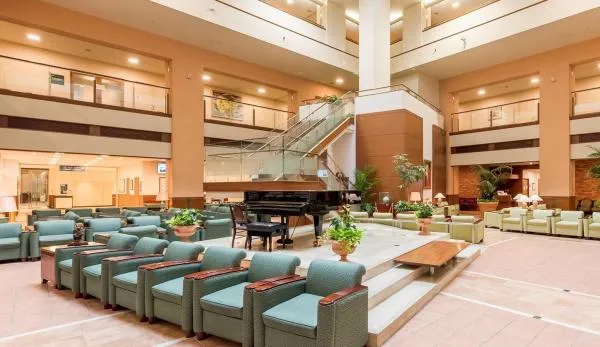
Image. Sanno Hospital reception area.
Sanno Hospital staffs English-speaking doctors and Japanese-English interpreters. It sits less than a 5-minute walk from Aoyama-itchome and Nogizaka Stations.
The hospital offers a wide range of patient-focused care. Services include dentistry, ophthalmology, breast surgery, psychosomatic medicine, and a respected obstetrics and gynecology department.
Walk-ins are accepted for specific departments only. Check the hospital's Outpatient page to confirm which ones. Reception runs 8:30–11:30 a.m. and 1:00–4:30 p.m., Monday through Saturday.
Address: 8-10-16 Akasaka, Minato-ku, Tokyo 107-0052 | Reception: 03-3402-3151
Access: Aoyama-itchome Station, Tokyo Metro Ginza line, Hanzomon line, and Toei Oedo line, Exit 4; Nogizaka Station, Tokyo Metro Chiyoda line, Exit 3
4. International Health Care Clinic

Image. International Health Care Clinic receiving area.
This clinic treats non-life-threatening illness and injury for multilingual patients. It doesn't matter if you have Japanese health insurance or not.
As an overseas travel clinic, it also arranges international medical transportation. This covers transport between countries and between hospitals inside Japan.
International Health Care Clinic requires a reservation in advance. Book through their website form, or email them to set up your appointment.
Address: 2-10-5 Sueyoshi Bldg, 3F, Shimbashi, Minato-ku, Tokyo 105-0004 | Reception: 03-3501-1330
Access: Shimbashi Station. JR Yamanote line, Ueno-Tokyo line, Ginza line; Uchisaiwaicho Station, Mita line
5. Tokyo Midtown Clinic

Image. Tokyo Midtown Clinic reception area.
Tokyo Midtown Clinic runs a special outpatient center and a next-gen health screening center. It was also one of the first hospitals in Japan accredited by Joint Commission International's Ambulatory Care Program.
This is an internationally recognized health care standard. The clinic also provides flu shots.
Outpatient service at Tokyo Midtown Clinic runs by appointment only. Book up to one month ahead through their internet reservation system, or call directly.
Address: 9-7-1 Midtown Tower 6F, Akasaka, Minato-ku, Tokyo 107-6206 | Reception: 03-5413-0080
Access: Roppongi Station, Toei Oedo Subway line, Exit 8; Roppongi Station, Tokyo Metro Hibiya line, Exit 4
6. Tokyo Saiseikai Central Hospital

Image. Tokyo Saiseikai Central Hospital reception area.
Tokyo Saiseikai Central Hospital is JMIP-certified and a short walk from Akabanebashi Station. It offers comprehensive care for international patients, plus an on-site Emergency and Critical Care Center.
The hospital runs an international office for patients who don't speak Japanese. Interpreters on-site speak English, Spanish, French, Portuguese, and Chinese.
Departments include:
Internal medicine and neurology
Cardiovascular surgery and cardiovascular internal medicine
Psychiatry, pediatrics, and gynecology
Ophthalmology and emergency and critical care medicine
Radiology and rehabilitation
Book a reservation in advance, or bring a medical referral letter. Without one, expect a much longer wait for your consultation.
Address: 1-4-17 Mita, Minato-ku, Tokyo 108-0073 | Reception: 03-3451-8211
Access: Akabanebashi Station, Toei Oedo line, Akabanebashi Exit; Shibakoen Station, Toei Mita line, Exit A2; Azabujuban Station, Tokyo Metro Nanboku line, Exit 3
7. Medical Clinic Hiroo

Image. Medical Clinic Hiroo, from Google maps.
The clinic's director, Dr. Michiko Suwa, is a U.S. board-certified pediatrician. She has treated patients from more than 60 countries.
The clinic offers pediatrics, internal medicine, respiratory medicine, and dermatology in English. Vaccines are also available on-site.
Walk-ins are welcome for general visits. Immunizations, physical exams, and well-child visits need an appointment.
Address: 5-16-4 Hiroo, Shibuya-ku, Tokyo | Reception: 03-3443-7060 (Japanese), 03-3444-7070 (English)
Access: Hiroo Station, Hibiya Subway line, Exit 2
8. National Medical Clinic

Image. National Medical Clinic’s receptionists.
National Medical Clinic provides pediatric medicine and pediatric surgery. Native English-speaking doctors, nurses, and staff run the clinic.
The clinic also offers general internal medicine, immunization, and cosmetic plastic surgery. Dr. Che leads care alongside a native English-speaking team.
This clinic doesn't accept Japanese Health Insurance. Staff will still help you complete insurance forms at no charge.
Appointments are required here. Call reception directly to book your reservation.
Address: 5-16-11-202 Minami-Azabu, Minato-ku, Tokyo 106-0047 | Reception: 03-3473-2057
Access: Hiroo Station, Hibiya Subway Line, Exit 1
9. Tokyo Medical and Surgical Clinic

Image. Tokyo Medical and Surgical Clinic’s receptionist.
Tokyo Medical and Surgical Clinic staffs multilingual, European- and U.S.-trained doctors. Tokyo Medical and Surgical Clinic covers family practice, specialty consultations, vaccinations, and travel medicine.
The clinic also handles minor clinical procedures and emergencies. Consultations and first visits usually need an appointment.
Acutely ill patients can be seen without one, though. This clinic doesn't accept Japanese National or Social Health Insurance.
Staff will still give you an itemized receipt and diagnosis statement. Use these for your own insurance claims.
Address: 32 Shibakoen Bldg, 2F, 3-4-30 Shibakoen, Minato-ku, Tokyo | Reception: 03-3436-3028
Access: Kamiyacho Station, Hibiya Subway line, Exit 1
10. Kijima Pediatric & Otorhinolaryngology
Kijima Pediatric & Otorhinolaryngology sits in Tomigaya, Shibuya-ku, near Yoyogi Park. This clinic pairs pediatrics with ear, nose, and throat (ENT) care under one roof.
English support covers both departments, a rare combination among english speaking doctors in Tokyo. Staff also accept Japanese National Health Insurance.
Book online, but first-time visitors must schedule their initial visit in person. Vaccination appointments also need advance booking.
Address: 2-21-10 Tomigaya, Shibuya-ku | Reception: 03-3467-6740 Access: Yoyogi-koen Station, Chiyoda Line Hours: Mon, Tue, Wed, Fri: 9 a.m.–12:30 p.m., 3:50–7 p.m.; Sat: 9 a.m.–12:30 p.m. Closed Thursday and Sunday.
What to bring and what to expect at reception
What to bring to your appointment
Bring these items to any hospital or clinic visit in Tokyo:
Passport or residence card for ID
Your My Number Card, if it's registered for health insurance, or your Certificate of Eligibility if it isn't
Cash, since many hospitals still prefer it over cards
A list of current medications and allergies
Any past referral letters or medical records
A mask, especially if you're visiting with symptoms
What to expect at reception
When you arrive, head straight to the reception desk. Staff there will ask you to fill out a form describing your symptoms.
If you don't have Japanese health insurance, expect to pay a deposit upfront. At many hospitals, this runs around ¥30,000, though the exact amount varies by site.
If you need an interpreter, note that you may wait longer to see the doctor. Ask reception for assistance booking one in advance if your appointment allows it.
After your consultation, return to reception to settle the bill. Request an English medical certificate here if you'll need one later, usually for an extra fee.
If it's a medical emergency
Call 119 for an ambulance in Japan. Operators may not speak fluent English, so speak slowly and clearly.
Paramedics will find a hospital that can treat you. You can request English-speaking staff once you arrive, though availability isn't guaranteed.
For non-emergencies outside normal hours, call Himawari at 03-5285-8181. They help place patients with hospitals and clinics open at that hour, in English, Chinese, Korean, Thai, and Spanish.
Extra fees to expect
Beyond the consultation itself, hospitals may add:
Admin fee — a few thousand yen at larger hospitals
Non-referral fee — charged if you visit without a referral letter
Referral letter fee — for requesting one to see a specialist
Insurance claim fee — for hospitals preparing paperwork on your behalf
Out-of-hours fee — added for nighttime or holiday visits
Ask reception about these fees before your visit, so there are no surprises. For more on how Japanese health insurance works, see our guide to health insurance in Japan for foreigners.
Read also:
👉How to Pay National Health Insurance in Japan
👉Forgot to Pay Japan NHI? Here’s What Happens
Frequently asked questions
What are some top English-speaking hospitals in Tokyo?
Some top english speaking hospitals in Tokyo include St. Luke's International Hospital, Tokyo Takanawa Hospital, and Sanno Hospital. Tokyo Saiseikai Central Hospital and the International Health Care Clinic also serve many international patients.
Are there hospitals in Tokyo with multilingual support?
Yes. Several hospitals in Tokyo offer multilingual support, including St. Luke's International Hospital, Tokyo Saiseikai Central Hospital, Tokyo Takanawa Hospital, and Sanno Hospital.
Are there English-speaking clinics in Tokyo?
Yes. Several English-speaking clinics operate across Tokyo, alongside larger hospitals. Clinics include International Health Care Clinic, Tokyo Midtown Clinic, and Kijima Pediatric & Otorhinolaryngology. Tokyo Takanawa Hospital and Sanno Hospital also welcome English-speaking patients.
What's the difference between a clinic and a hospital in Tokyo?
Clinics are smaller and usually focus on one specialty. Hospitals are larger, house multiple departments, and can run tests a clinic can't.
Start at a clinic for mild symptoms. Staff there can refer you to a hospital if you need specialist care.
Is there an English-speaking ENT doctor in Tokyo?
Yes. Kijima Pediatric & Otorhinolaryngology in Shibuya-ku treats ear, nose, and throat conditions with English support. Tokyo Takanawa Hospital also runs an otorhinolaryngology department for adults and children.
Are there any hospitals in Tokyo listed on Wikipedia?
Yes. Wikipedia lists several Tokyo hospitals, including the Center for the Mentally and Physically Handicapped, Ebara Hospital, International Catholic Hospital (Seibo Hospital), and Japanese Red Cross Medical Center. These are separate from the 10 hospitals and clinics recommended above.
Where can I find an English-speaking doctor near me right now?
Call the Tokyo Metropolitan Health and Medical Information Center at 03-5285-8181. They run daily from 9 a.m. to 8 p.m. and speak English, Chinese, Korean, Thai, and Spanish.
They can point you to nearby english speaking doctors based on your location and symptoms. For a longer list, see the 10 hospitals and clinics above.
What services do Japanese hospitals offer?
Japanese hospitals offer a wide range of medical treatments. Most provide both inpatient and outpatient services.
Many hospitals also have an on-site convenience store and restaurant.
What should I know about going to a Japanese hospital?
Adults under national health insurance pay 30% of medical costs. There's a monthly cap based on your income.
Where can I find information about international hospitals in Japan?
Check the Japan Medical Service Accreditation for International Patients (JMIP) or Japan International Hospitals (JIH) websites. Both list international hospitals across Japan.
What can I expect from a hospital stay in Japan?
Japanese hospitals run on strict rules, including limited shower times and regular night checks by nurses. Meals usually include white rice, fish, tofu, or meat, plus soup and vegetables, and aren't covered by insurance.
For serious treatments, hospitals require a family member for consent. If your stay is unplanned, hospitals can provide some essentials for a fee.
Do Japanese hospitals accept traveler's insurance?
No. Most Japanese hospitals and clinics don't accept foreign insurance directly. You pay out of pocket first, then file for reimbursement.
Check your travel insurance policy details before your trip. Medical care in Japan can be expensive, so adequate coverage matters.
In closing
Knowing where to turn for future emergencies takes the stress out of the unknown. See also, "Top Options for English-Speaking Insurance Companies for Emergencies in Japan."
None of these 10 hospitals and clinics felt right for you? Browse the full facility list on the JMIP or JIH websites.
Spending too long figuring out your Japanese mail?
Virtual mail + translation services start at 3800 per month. 30-day money-back guarantee.